
104 Matches. 48 Teams. Here's How Die-Hard World Cup 2026 Fans Stay Across Every Word
104 matches. 39 days. Staggering amounts of written football coverage. Discover how obsessed fans are using audio to follow the biggest World Cup ever — during commutes, lunch breaks, and every gap in between.
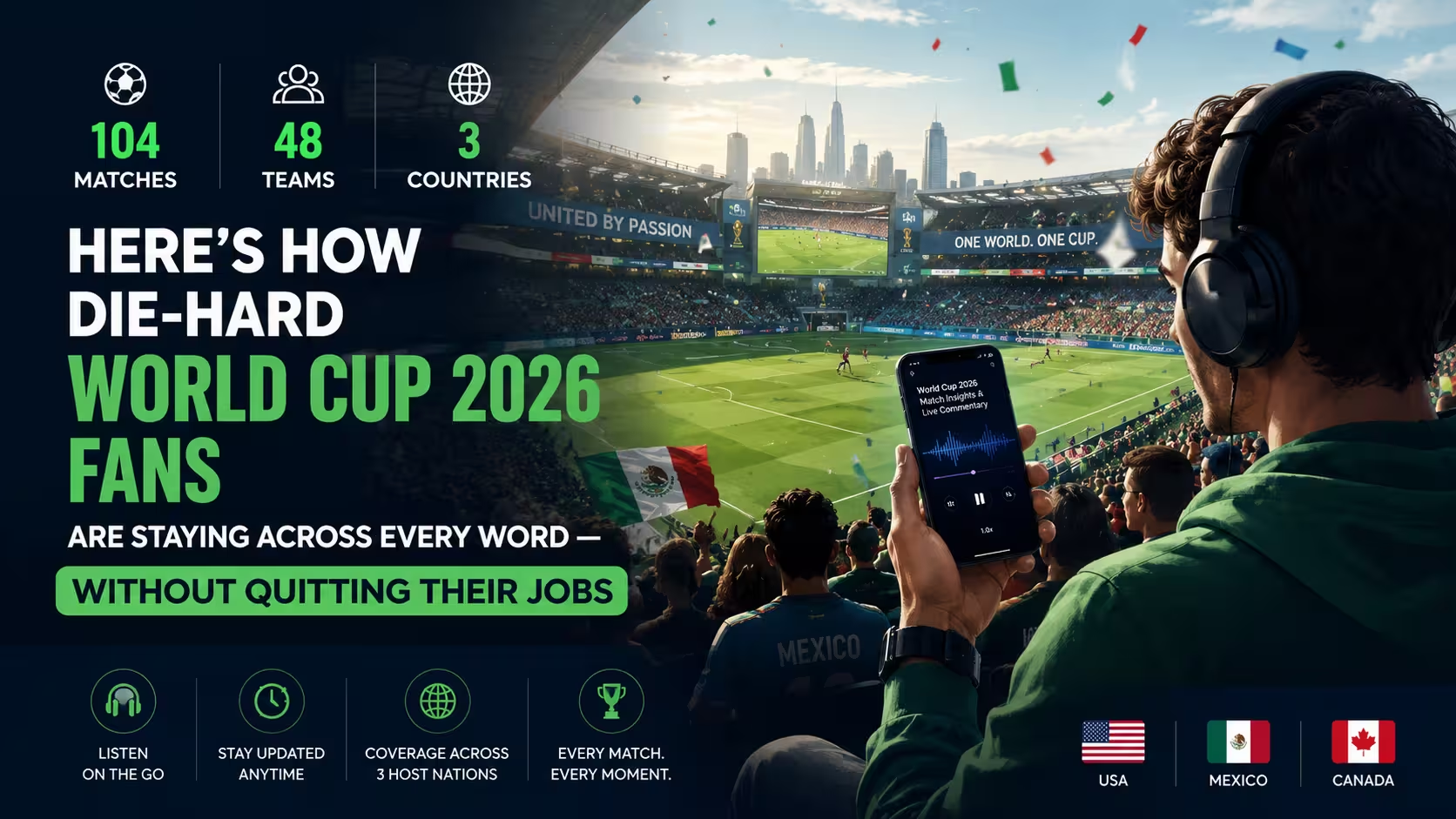
"The matches are only half the story. The reading is the other half — and most of it is sitting unread in your tabs."
Right now, somewhere in the world, six different matches are happening simultaneously — and you're at your desk.
Erling Haaland just scored in the 89th minute. Lamine Yamal did something outrageous with the ball that nobody under 22 should legally be allowed to do. Messi received a standing ovation walking off the bench. Mbappé is trending globally for the fourth time this week. And your group chat has sent 340 messages since 9am.
You've seen none of it. You're in a meeting. Or at your job. Or doing the very ordinary adult things that the FIFA World Cup 2026 — largest, longest, most sprawling football tournament in the history of the sport — has absolutely no interest in accommodating.
This is the World Cup fan's eternal dilemma, taken to its most extreme form yet. In 2026, it's bigger than it has ever been.
The Biggest Football Content Explosion in History
The 2026 FIFA World Cup is the first ever to feature 48 teams and 104 total matches, co-hosted across the United States, Canada, and Mexico, running from June 11 all the way to July 19. That's a 39-day tournament with more football than any edition that came before it.
The 2022 World Cup in Qatar alone reached around five billion people globally, with 1.5 billion watching the final. This edition is bigger.
What does all that football generate? Content. Staggering, relentless, brilliant football content. Every one of those 104 matches produces:
- A full match report (usually 800–1,500 words)
- A tactical breakdown or analyst thread
- Player ratings from multiple publications
- Manager press conference coverage
- Injury and selection updates
- Historical context pieces ("the last time these two nations met...")
- Fan reactions and culture pieces
- Group table analysis and qualification mathematics
Do the multiplication. Across a 39-day tournament, the written football coverage produced by the global press — ESPN, The Athletic, BBC Sport, The Guardian, Sky Sports, Goal, and dozens of specialist football blogs — is astronomical.
For fans who love to read about football — not just watch it — the World Cup is not just a sporting event. It is the most intense literary season of the year. And most of it is sitting unread in your tabs.
The World Cup Fan's Real Problem
Here's what nobody says out loud but every passionate fan knows: the games are only part of following the World Cup properly. The reading is the other half.
Knowing what Haaland said in the post-match interview. Understanding why the coach switched formation in the 58th minute. Following the subplot of Cape Verde — a tiny island nation playing only their first-ever World Cup, having already made history by reaching the knockout rounds. Keeping up with Portugal's campaign as Ronaldo chases one last shot at a trophy at what is almost certainly his final World Cup. Tracking the Messi narrative as Argentina defends their title.
The Fan Who Only Watches
Knows the results. Misses the context, the tactics, the subplots, the quotes. The conversation moves on and they're two matches behind, skimming headlines rather than understanding what's actually happening.
The Fan Who Uses Audio
Catches every match report on the commute in. Listens to the tactical breakdown over lunch. Absorbs the player profile during the evening run. Knows the World Cup the way the obsessives know it — fully, deeply, in context.
The experience obsessed fans want is not just match watching. It's full immersion — the context, the history, the tactics, the personalities, the storylines running beneath the scorelines. But most of the written content piles up during exactly the hours when fans are at work, commuting, or asleep. Audio gives them the window back.
ReadLoudly tools: PDF Reader · Text to Speech · Notes to Audio
How Fans Are Using ReadLoudly to Follow Every Word of the World Cup
ReadLoudly converts any text-based content — articles, match reports, tactical breakdowns, PDF analysis — into natural, clear audio you can listen to anywhere. For a football fan in the middle of a World Cup, this isn't a productivity tool. It's a lifeline.
The Commute Catch-Up
You couldn't watch last night's late game — the one that kicked off at 11pm your time. You woke up, avoided social media long enough to check the score, and now you need the full story. The formation. The goals. The turning points. The controversy. The quotes.
You have 35 minutes on the train to work. Upload the match report from The Athletic or ESPN to ReadLoudly. Hit play. By the time you're at your desk, you know everything — not just the result, but the texture of the match, the context, the tactical reasoning behind every major moment. You can participate in the conversation your colleagues are having.
Without ReadLoudly
You skim a headline, check the score, miss the story. Your colleague asks "what did you think of the second goal?" and you have nothing to offer. The match happened and passed you by.
With ReadLoudly on the Commute
35 minutes. Full match report. You arrive at your desk knowing the formation change in the 58th minute, the goalkeeper's defining save, the quote that lit up social media. Fully caught up.
The Lunchtime Tactical Listen
The football analyst you follow just published a 2,500-word piece on how Norway set up to press Argentina. It's brilliant. It has diagrams. It has data. You've had it bookmarked since 8am.
Your lunch break is 30 minutes. You're not going to read 2,500 words while also eating and pretending to take a break from your screen. But you can listen to 2,500 words in under 16 minutes at 1.5x speed — while actually having lunch, actually resting your eyes, and coming back to your afternoon genuinely informed about something you care about.
The Evening Profile Session
One of the great pleasures of a World Cup is discovering players you didn't know before. Cape Verde's goalkeeper has become one of the stories of the tournament. Norway's golden generation are making their mark in ways fans didn't anticipate. There are stories everywhere in this expanded, 48-team field that deserve more attention than a scroll through a social media feed provides.
Long-form player profiles and country profiles are exactly the content that rewards a quiet evening listen. Upload a handful to ReadLoudly. Put your headphones in while cooking or tidying. Emerge from the evening knowing the World Cup the way the obsessives know it.
The Pre-Match Briefing
Your team plays tomorrow. You want to know everything going in: the opponent's form, the likely lineup, the tactical matchup, the referee, the injury news, the historical head-to-head record.
The good sports desks publish pre-match previews that cover all of it in a single piece. Upload it to ReadLoudly the night before. Listen during your morning routine. Walk into match day genuinely prepared — not just excited, but informed.
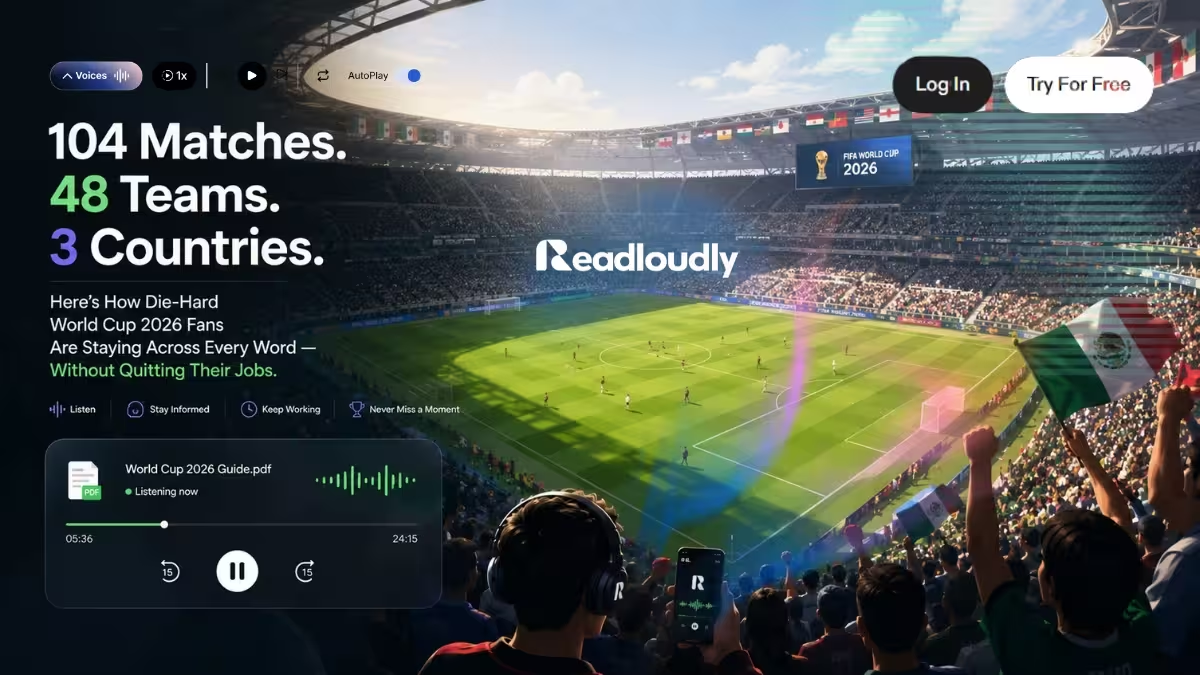
What Content Works Best as Audio During the World Cup
Not everything needs to be listened to. Part of using audio effectively is knowing which content earns it. The ratio is heavily in audio's favour — most football journalism is prose, and prose is exactly what ReadLoudly was built for.
Best for Listening
- ✓Match reports and post-match analysis (narrative, flows perfectly as audio)
- ✓Player profiles and feature writing (longer reads that reward sustained attention)
- ✓Pre-match previews (context-heavy, no visual dependency)
- ✓Tactical explainers in prose form (arguments and reasoning translate well)
- ✓Press conference summaries and quotes
- ✓Tournament columns and longer think-pieces
Better Left on Screen
- ✕Live score trackers and match stats (visual, real-time)
- ✕Video highlights and clips (obviously)
- ✕Data-heavy pieces built around tables and charts
- ✕Formation diagrams and heat maps
| Content Type | Screen Reading | Audio with ReadLoudly |
|---|---|---|
| Match reports | Unread by next morning — the news cycle has already moved on | Consumed on the morning commute, before you arrive at your desk |
| Tactical breakdowns | Bookmarked, opened once, rarely finished — too long for screen time | 2,500 words at 1.5x = 16 minutes, perfect for a lunch break |
| Player profiles | Saved to Pocket, rarely returned to — feels like optional reading | Evening listen while cooking — you emerge knowing the player's full story |
| Pre-match previews | Skimmed for lineup news only — the tactical context gets missed | Full listen on the morning of the match — you walk in genuinely prepared |
ReadLoudly tools: PDF Reader · Text to Speech
The 39-Day Window
The World Cup does not extend courtesies to your schedule. It started on June 11. It ends on July 19 at MetLife Stadium in what will be the biggest final in the tournament's history, regardless of who plays in it.
You have until then to follow this thing properly. After July 19, the football world packs up and the moment is gone for another four years.
The fans who will look back on World Cup 2026 and feel they truly experienced it — not just survived it between work and sleep — are the ones who found a way to consume the full picture. The context. The analysis. The human stories underneath the results.
Most of the time to do that isn't in front of a screen. It's in the commute, the gym, the kitchen, the twenty minutes between meetings. These are not wasted hours — they are your listening window. Every morning commute is a match report. Every lunch break is a tactical breakdown. Every evening run is a player profile you didn't know you needed to know.
The World Cup coverage is being written whether you read it or not. ESPN is filing copy after every game. The Athletic is publishing analysis through the night. The question isn't whether great football journalism exists during the World Cup — it unquestionably does. The question is whether it reaches you, or sits unread in a tab you meant to get back to.
The Fan Who Watches But Doesn't Follow
Sees the results. Gets the highlights. Misses the context, the subplots, the storylines. Arrives at the final without really knowing what the tournament meant — just what it produced.
The Fan Who Follows Every Word
Knows the tactical evolution across the group stage. Understands why a particular team's journey matters beyond the scoreline. Arrives at the final already invested in both sides. This is the experience audio makes possible.
Your Five-Minute Setup Before Tomorrow's Games
You don't need a new subscription. You don't need a new app. Here's exactly how to start following World Cup 2026 the way obsessed fans do:
Go to your most trusted football publication
ESPN, The Athletic, BBC Sport, The Guardian, Sky Sports — whichever you already read most.
Find last night's match report or tomorrow's preview
The match report from the game you missed, or the pre-match preview for the fixture you're anticipating.
Upload or paste it into ReadLoudly
Save as PDF and use the PDF Reader, or copy the text and paste it into Text to Speech. Either way works.
Set your speed — 1.25x is the sweet spot for football journalism
Brisk enough to move through the content without losing the texture of the writing. Increase to 1.5x for factual briefings.
Press play on your next commute or break
By the time you arrive, you know the game. You know the story. You're ready for whatever comes next in the biggest football tournament ever staged.
There are still knockout rounds, quarter-finals, semi-finals, and a final to follow. Every match. Every story. ReadLoudly is how you stay in the game — even when you can't watch it.
The matches are happening with or without you. The coverage is being written whether you read it or not. All of it is audio time. All of it can be World Cup time.